


How to clean jewelry at home (by metal & gemstone) — 2025 guide

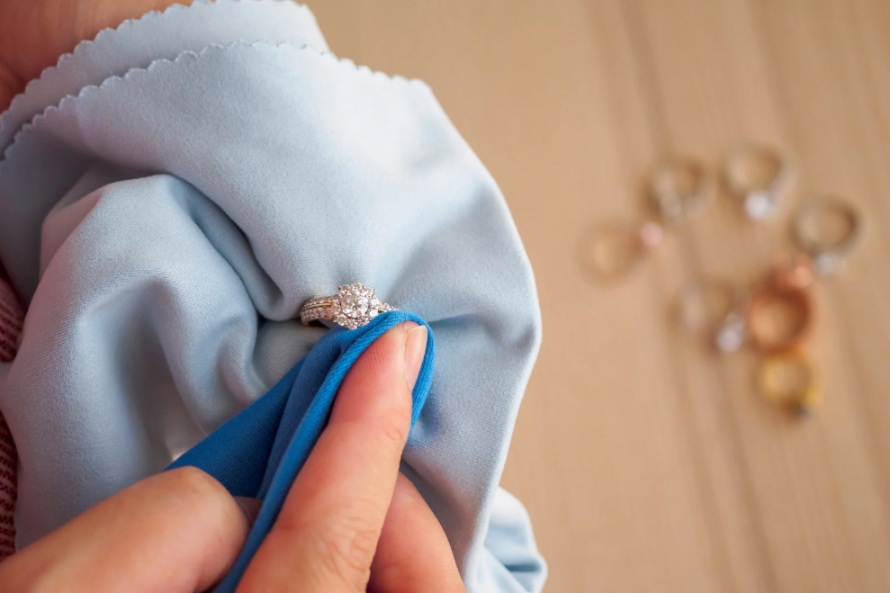
A little care goes a long way. This step-by-step guide shows you exactly how to clean jewelry at home safely—first by metal, then by gemstone—with clear do/avoid lists, when to skip DIY, and pro tips that protect settings and delicate stones. We’ve also added quick internal references to help you dive deeper into diamonds, rings, and cuts from our own blog.
Before you start: universal rules & safety checks
A short routine prevents most mishaps and scratches. Do these first, every time.
- Stage your workspace. Work over a soft towel and close the drain. Use a small bowl—never clean directly under a running tap.
- Use gentle basics. Lukewarm water + a drop of mild dish soap + soft brush (or cotton swab) + lint-free cloth is the safe default for most jewelry.
- Inspect settings. Check prongs and clasps. If a stone looks loose or you spot chips/cracks, stop DIY and see a jeweler.
- Avoid the usual hazards. No bleach/chlorine/acetone; skip abrasives (e.g., toothpaste) that scratch metals and softer gems.
- Know your treatments. Some gems are oiled, filled, dyed, coated, or heat-treated—these may need special care and should be disclosed in the first place under industry guidelines.
Quick reads from our blog for later:
Clean by metal
Different metals react differently to soaps, cloths, and polishes. Start with your metal, then refine for the gemstone.
Gold (yellow/rose) & platinum — everyday safe method
Warm soapy water + soft brush is your go-to for grease and daily film.
- Mix: A few drops of mild dish soap in a small bowl of lukewarm water.
- Soak: 10–15 minutes.
- Brush: Gently under settings; avoid scrubbing the metal hard.
- Rinse: In a second bowl of clean water.
- Dry/polish: Pat dry; finish with a lint-free cloth.
- Occasional degrease: A tiny splash of household ammonia in the soapy solution can help on diamond-set pieces—not for plated or delicate stones; use sparingly.
White gold (rhodium-plated) — keep the finish bright
Rhodium plating gives white gold its crisp, mirror-white look; harsh methods wear it down.
- Do: Same gentle soap-and-water routine; blot dry.
- Avoid: Abrasive cloths, frequent ammonia, or aggressive ultrasonics that may hasten plating wear.
- Plan: Expect periodic rhodium replating if you want a brand-new look year after year.
Sterling silver — remove tarnish without harming stones
Silver tarnishes from sulfur compounds in the air; treat gently to protect settings.
- Do first: Soap-and-water clean; then use a dedicated silver polishing cloth on metal only.
- Use with care: The baking-soda + foil method is best reserved for plain, un-set solid silver; avoid on pieces with stones or glued components.
- Avoid: Toothpaste and powdered abrasives—they scratch.
Vermeil & gold-plated — treat like a delicate finish
Plated layers are thin; your mission is to clean without removing metal.
- Do: Quick dip in soapy water; gentle wipe; air-dry.
- Avoid: Abrasives, ammonia, long soaks, ultrasonic/steam.
- Tip: Store separately to reduce friction and premature wear.
Clean by gemstone
Once metal is handled, tailor the method to the stone. Some gems love ultrasonics; others crack, craze, or lose fillers.
Diamonds (natural & lab-grown) — sparkle without risk
Diamonds handle soap-and-water well, but settings and treatments determine what’s safe.
- Do: Soak in mild soapy water; brush behind the stone and under the gallery; rinse in a bowl; blot dry.
- Ultrasonic caution: Often fine for secure, untreated diamonds—but avoid if fracture-filled, heavily included, or if the mounting is fragile; ultrasonics can also shake loose stones.
- Lab-grown note: Clean just like natural diamonds.
Explore diamonds further:
Sapphires & rubies — tough, with exceptions
Corundum is durable, but watch for treatments and special varieties.
- Do: Soap-and-water routine; soft brush.
- Maybe ultrasonic: Proceed if stones are untreated and the setting is sound—but avoid for star ruby/sapphire and certain heat/treatment scenarios.
Emeralds — beautiful, often oil/resin-filled
Most emeralds are filled to improve appearance; heat and vibration can expel fillers.
- Do: Lukewarm soapy water; soft cloth only.
- Avoid: Ultrasonic and steam cleaners; harsh chemicals; long soaks.
Pearls — organic and porous (treat like silk)
Pearls absorb chemicals; their luster comes from delicate layers of nacre.
- Do: Wipe with a slightly damp, soft cloth after every wear; lay strands flat to dry (don’t hang); a brief wash with mild soap is okay.
- Avoid: Soaking, chemicals, abrasives, ultrasonic/steam; apply perfume/hairspray before jewelry.
Opal, turquoise, lapis, malachite — porous & sensitive
These gems can craze, discolor, or absorb liquids.
- Do: Quick wipe with a barely damp soft cloth; dry immediately; store away from heat.
- Avoid: Soaking, ultrasonic/steam, strong detergents.
Tanzanite, morganite, kunzite & other heat-sensitive stones
These beauties can be cleaved or heat-shocked if handled roughly.
- Do: Gentle soap-and-water only; avoid sudden temperature changes.
- Avoid: Ultrasonic/steam, aggressive brushing.
Ultrasonic & steam cleaners: when they’re OK (and when they’re not)
Power tools are great for encrusted grime, but only when stone and setting allow it.
- Generally OK: Securely set diamonds, sapphires, rubies that are untreated and not heavily included.
- Do not use on: Emeralds; porous/organic gems (pearls, opal, turquoise, lapis, malachite); fracture-filled diamonds; flux-healed or star corundum.
- Always check the mounting first, vibration can loosen stones even if the gem can handle ultrasonics.
At-a-glance: safe methods by metal & gemstone
Use this quick reference, then read the relevant section for details.
Item
Safe home method
Avoid
Gold/Platinum
Mild dish soap, soft brush, bowl rinse, blot dry
Abrasives; harsh chemicals
White gold (rhodium)
Same as gold; gentle only
Frequent ammonia, abrasives, and aggressive ultrasonic
Sterling silver
Soap-and-water, silver polishing cloth
Toothpaste; foil method on gem-set pieces
Vermeil/Plated
Quick soapy dip; gentle wipe
Abrasives; ammonia; ultrasonic/steam
الماس
Soap-and-water; cautious ultrasonic if untreated & secure
Ultrasonic on fracture-filled/loose settings
Sapphires/Rubies
Soap-and-water; ultrasonic only if untreated & secure
Ultrasonic on star stones/treated pieces
Emeralds
Soap and water, soft cloth
Ultrasonic/steam; long soaks
Pearls
Wipe after wear; brief mild-soap rinse; lay flat
Soaking; chemicals; ultrasonic/steam
Opal/Turquoise/Lapis
Minimal damp wipe; dry immediately
Soaking, ultrasonic/steam
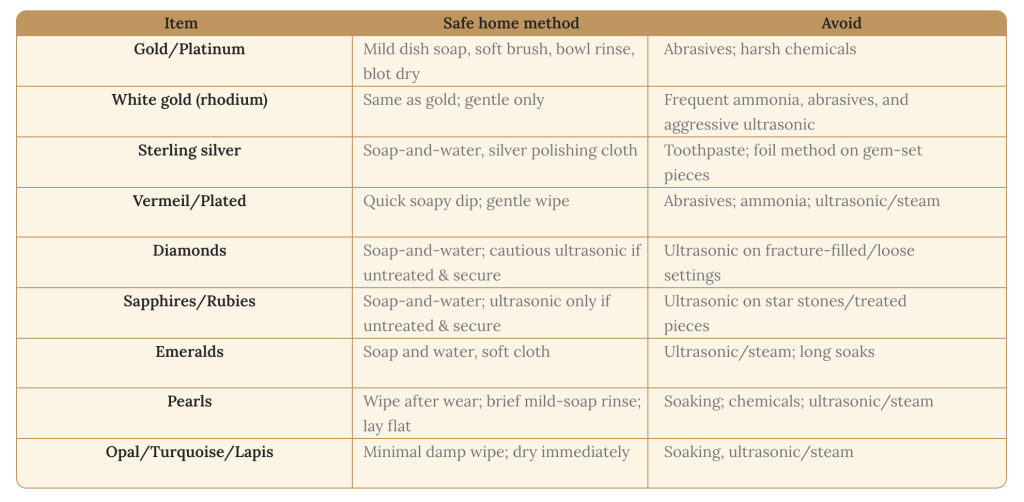
(Methods summarized from GIA care guidance.)
Frequency, storage & tarnish prevention
Good habits keep cleaning minimal and your pieces inspection-ready.
- Cleaning cadence: Rings every 2–4 weeks, depending on use; pearls are wiped after every wear.
- Pro check-ups: Have settings inspected and jewelry professionally cleaned every 6–12 months.
- Storage: Dry pieces before storing; keep items separate; use anti-tarnish pouches for silver; keep pearls flat.
Planning a new ring or upgrade? Skim our Wedding Ring Guide for buying tips.
Care by jewelry type
Different builds collect grime in different places, focus on where residue hides.
Rings — the daily-wear magnet
Rings pick up lotion, soap scum, and kitchen oils quickly.
- Focus: Under-gallery and around prongs; brush gently.
- Check: Prongs for snagging/looseness; remove when lifting weights or doing abrasive tasks.
Necklaces & chains — avoid kinks
Light chains tangle and kink; clasps trap dirt.
- Do: Lay flat to clean; dab clasp area; pat dry.
- Don’t: Yank knots, use a pin and baby oil, then clean and dry.
Earrings — clean & sanitize smartly
Skin oils and hair products build up fast.
- Do: Soap-and-water clean; thoroughly dry posts/backs.
- Don’t: Use harsh disinfectants on pearls/porous stones; stick to mild methods.
When to stop DIY and see a jeweler
Some scenarios need a bench, not a brush.
- Loose stones, bent prongs, mystery treatments, antique/heirloom pieces, or heavy grime that survives gentle cleaning.
- If in doubt, avoid ultrasonics/steam and book a professional inspection.
FAQ (quick, practical answers)
Can I use toothpaste to clean jewelry?
Skip it. Toothpaste is abrasive and can scratch metals and softer stones; stick to mild soap and a soft brush.
Is the baking-soda + foil trick safe for all silver?
Use it only on plain, un-set sterling silver; it’s not advisable for gem-set or glued pieces. A silver polishing cloth is the safer all-rounder.
Are ultrasonic cleaners safe for emeralds or treated stones?
No. Avoid emeralds (often oil/resin-filled) and fracture-filled diamonds or porous/organic gems. Use the soap-and-water routine instead.
How do I clean a diamond ring without hurting the setting?
Soak in mild soapy water, brush gently from the underside, and rinse in a bowl. If you suspect a loose stone, skip ultrasonics and see a jeweler.
What’s the safest way to clean pearls at home?
Wipe with a damp soft cloth after each wear; a quick wash with mild soap is okay. Lay strands flat to dry; avoid chemicals and soaking.
Can I soak opal or turquoise?
No. They’re porous/sensitive; use a barely damp cloth and dry immediately.
Is ammonia okay for gold or platinum?
Sources & standards we trust (for your peace of mind)
We align our care advice with GIA (gem care and ultrasonic/steam cautions), Jewelers of America (routine care and pro check-ups), and the FTC Jewelry Guides (treatment disclosures and truthful claims). For terminology and best practice in pearls and colored stones, we reference CIBJO Blue Books.
Conclusion
You don’t need fancy gear to clean jewelry at home, just gentle soap, a soft brush, and the right plan for your metal and gemstone. When you know which stones dislike heat, vibration, or soaking, you’ll keep luster high and repairs low. And if something seems off: loose prong, unusual film, mystery treatment; pause the DIY and book a professional clean.
Want more jewelry know-how? Explore our quick primers: