


14K vs 18K Gold: Durability, Everyday Wear & Allergy Guide (2025)

Choosing between 14K and 18K gold sounds simple – until you factor in durability, color, upkeep, allergy sensitivity, and price. This guide gives you the practical, real-world differences so you can pick the metal that fits your lifestyle and love it for years.
Quick actions:
14K vs 18K at a glance (purity, hallmarks, color)
Understanding purity first makes every other choice easier. Karat (with a K) measures gold fineness out of 24 parts, while carat (with a C) measures gemstone weight – two very different things.
- Purity & stamps (hallmarks): 14K gold is 58.5% pure gold (often stamped “14K” or “585”). 18K gold is 75% gold (often stamped “18K” or “750”). These marks are how manufacturers indicate content and fineness.
- Alloying metals (what’s in the mix): The remaining percentage blends metals like copper, silver, zinc – and for some white gold alloys, nickel or palladium to create color and strength. Different alloys tweak hardness, color tone, and maintenance needs.
- Color cues: 18K tends to look richer/warm-yellow because it’s higher in gold content; 14K often appears slightly paler but still lux. Rose and yellow tones need similar care; white gold usually relies on a rhodium finish for a bright white look.
Durability & scratch resistance in real life
Both 14K and 18K are durable enough for everyday jewelry when well-designed, but the alloy recipe and how you wear it matter more than the number alone. Expect scratches over time – that’s normal metal “patina” – and plan light maintenance.
Everyday wear factors (what really affects longevity)
Many people ask if “18K is too soft.” The honest answer: modern alloys vary, and well-made pieces in either karat can handle daily life. Jeweler craftsmanship, ring profile (low vs high), and your activities (gym, tools, typing) matter as much as karat.
- Design & profile: Chunkier, lower-set rings snag less and spread wear; fine pavé and high-set prongs can show marks sooner. A routine polish brings back luster without removing excessive metal.
- Contact & abrasion: Rings meet doorknobs, dumbbells, and laptops – bracelets hit desks; pendants are gentler. If your hands see hard daily use, you might lean towards 14K for slightly more abrasion tolerance.
- Finish choices: High-polish shows micro-scratches faster than matte or brushed. A brushed finish can hide wear longer between polishes.
White gold specifics (rhodium & upkeep)
White gold is an alloy that’s often plated with rhodium for that crisp, bright white. Over months or years – depending on wear and skin chemistry – that plating can wear and reveal a softer, slightly warm undertone; occasional re-plating restores the bright finish.
- Maintenance cadence: Some heavy-wear rings need re-plating every 12–24 months; low-wear earrings may go much longer. It’s normal and part of white-gold ownership.
- Alternative alloy: Palladium-white gold avoids nickel and still looks beautifully white (often with less frequent replating). Ask for the alloy spec when ordering.
Yellow, white, or rose? Color & upkeep differences
Color is style – but also maintenance. Yellow and rose gold keep their tone with standard cleaning; white gold’s rhodium is the extra step to understand.
Color tone in 14K vs 18K (what the eye sees)
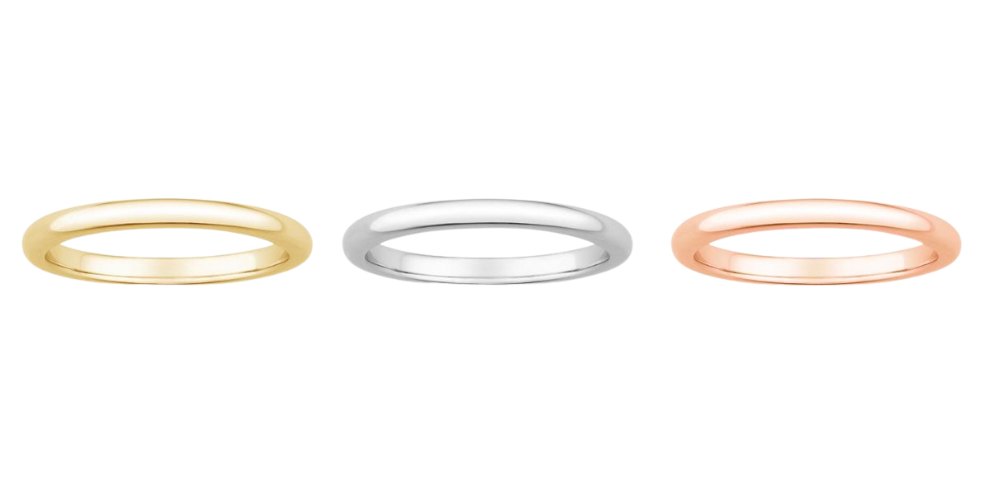
Because 18K is richer in gold, 18K yellow looks slightly warmer and deeper than 14K yellow. In rose, extra copper deepens the pink, but 18K still reads a touch richer; in white, the rhodium topcoat dominates the initial look regardless of karat.
- Style matching: Choose 18K if you love saturated gold tone and heirloom feel; pick 14K for a slightly lighter hue and a bit more everyday pragmatism.
- Mixing metals: It’s fine to stack 14K and 18K – contrast can be a styling advantage.
Allergies & sensitive skin: what to choose
If you’ve ever had a rash under a ring or earring, you might be reacting to nickel – a common sensitizer in some white-gold alloys and base-metal components. Comfort is key, so know your options.
Nickel allergy basics (the 2-minute primer)
Allergic contact dermatitis from nickel is common; it shows up as itchy, red skin where metal touches. The simplest prevention is wearing jewelry that’s nickel-free, hypoallergenic, or made from metals like platinum or higher-karat yellow gold.
- Safer picks: Platinum and palladium-white gold are excellent for many sensitive wearers; yellow or rose gold generally doesn’t rely on nickel. If you’re unsure, ask us to confirm the alloy sheet before purchase.
- EU compliance (why it matters): The EU’s long-standing rule limits nickel release from items that touch skin to ≤0.5 μg/cm²/week; reputable makers design to meet or beat this threshold. While a lab test confirms compliance, it’s a useful safety benchmark to know.
14K vs 18K by lifestyle & use case (chooser grid)
Your routine – not just the karat – decides the smarter pick. Use this quick chooser to match metal to your day-to-day.
Daily ring / active jobs
If you’re hands-on (fitness, healthcare, parent-of-toddlers), you want “forgiving” finishes and profiles. Many active customers lean toward 14K for slightly more abrasion tolerance, especially in rings.
- What to pair: Rounded profiles, low settings, and periodic polish keep pieces looking fresh.
- Shop help: Start with our Engagement Ring Guide for smart setting choices.
Heirloom/bridal & special-occasion wear
For keepsakes and lower-friction wear, 18K delivers that deep, classic gold look. You’ll still want routine cleaning and checkups, but many heirloom styles shine in higher purity.
- What to pair: Timeless solitaires, satin finishes, and thicker shanks.
- Explore: See our Wedding Ring Guide.
Delicate pavé & micro-detail
Micro-pavé stones need gentle handling, no matter the karat. Choose the metal color that flatters your stones, and plan professional cleanings to keep the sparkle high.
- What to pair: 14K or 18K works; focus on craftsmanship and aftercare.
- Learn: Brush up on Clarity and Cut.
Chunky bracelets & chains
Larger surfaces show scuffs more readily. If you love a pristine mirror-polish, schedule periodic refinishes; if you embrace patina, both karats age beautifully.
- What to pair: Heavier links in either karat; matte finishes hide wear longer.
- Tip: Check Carat Weight if you’re pairing with gemstones.
Price, value & resale
Metal cost scales with gold content, so 18K pieces are usually priced higher than comparable 14K designs. But value is more than purity: design, craftsmanship, brand, and condition drive what a piece is worth to you now – and to the next owner later.
- Budgeting smart: If the aesthetic you love exists in both karats, pick the one whose maintenance and feel match your lifestyle.
- Resale reality: Designer demand and condition often outweigh small purity differences in fashion jewelry; bridal categories can behave differently.
White gold maintenance: rhodium replating 101
Rhodium (a platinum-group metal) is used to give white gold that “chromy” brilliance and a protective skin. It’s normal for this layer to thin with wear – re-plating is simple and restores the bright tone.
What to expect & how to care
Think of rhodium like a premium car’s clear coat: gorgeous, protective, but not immortal. Remove rings at the gym and during household chemical use; book periodic clean-and-check appointments so we can advise on timing.
- Signs you’re due: Yellowish warmth peeking through or uneven shine on high-contact areas.
- Alloy choice matters: Palladium-white gold may need less frequent replating; platinum needs none (but shows its own type of wear).
- Service: Ask us about cleaning, polishing, and re-plate bundles during your annual inspection.
Hallmarks & authenticity (585 vs 750)
Stamps are your friend: 585 and 14K identify ~58.5% gold fineness; 750 and 18K identify 75%. Stamps aren’t decoration; they’re part of labeling guidance for precious metals.
What to check (and keep)
Look for clear marks inside rings or on clasp tabs, and keep receipts/appraisals with your records. If you inherit an unmarked piece, jewelers can confirm the content with non-destructive methods and documentation. U.S. FTC Jewelry Guides and international trade standards exist to keep these claims truthful.
- CIBJO context: Industry Blue Books support consistent nomenclature and fineness language used by retailers and labs worldwide.
- Reality check: Hallmarks can be worn or missing on vintage; testing plus provenance fills the gap.
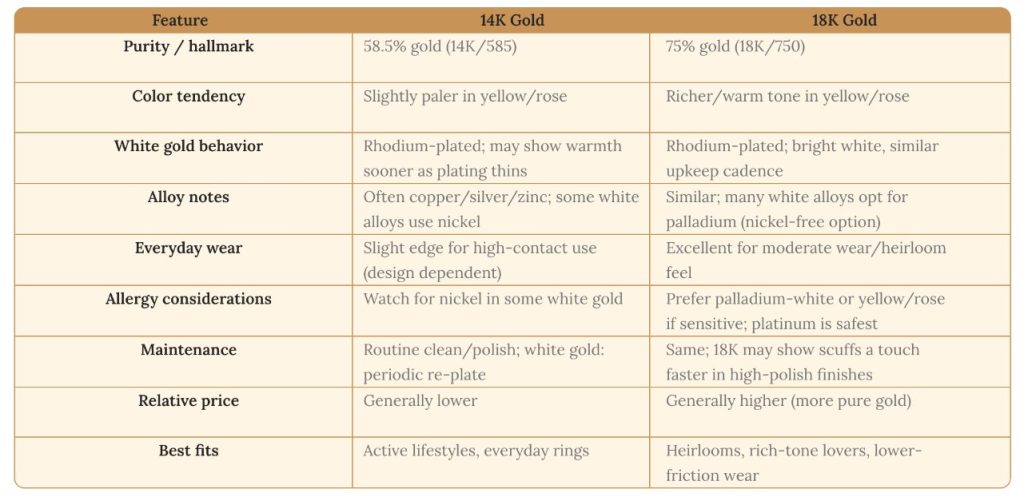
Quick comparison table
Feature
14K Gold
18K Gold
Purity / hallmark
58.5% gold (14K/585)
75% gold (18K/750)
Color tendency
Slightly paler in yellow/rose
Richer/warm tone in yellow/rose
White gold behavior
Rhodium-plated; may show warmth sooner as plating thins
Rhodium-plated; bright white, similar upkeep cadence
Alloy notes
Often copper/silver/zinc; some white alloys use nickel
Similar; many white alloys opt for palladium (nickel-free option)
Everyday wear
Slight edge for high-contact use (design dependent)
Excellent for moderate wear/heirloom feel
Allergy considerations
Watch for nickel in some white gold
Prefer palladium-white or yellow/rose if sensitive; platinum is safest
Maintenance
Routine clean/polish; white gold: periodic re-plate
Same; 18K may show scuffs a touch faster in high-polish finishes
Relative price
Generally lower
Generally higher (more pure gold)
Best fits
Active lifestyles, everyday rings
Heirlooms, rich-tone lovers, lower-friction wear
FAQs
Is 14K or 18K better for everyday wear?
Both are excellent for daily use when the design is appropriate and the alloy is well-made. Choose based on your lifestyle and finish preference; alloy formulation, not just karat, affects scratch behavior.
Does 18K scratch more easily than 14K?
It can, depending on the specific alloy and finish, but the difference is smaller in practice than internet myths suggest. Plan light refinishing as part of normal ownership; matte or brushed finishes hide wear longer.
Is white gold safe if I’m nickel-sensitive?
It depends on the alloy. Ask for palladium-white gold or choose platinum or high-karat yellow gold; dermatology guidance emphasizes avoiding nickel exposure where possible.
How often does white gold need rhodium replating?
There’s no one schedule; heavy-wear rings may need it annually or bi-annually, while low-wear pieces can go years. Look for warmth peeking through and book a clean-and-check to time it correctly.
What do “585” and “750” mean inside my ring?
They’re fineness stamps: 585 = 58.5% gold (~14K) and 750 = 75% gold (~18K). They align with common international hallmarking and FTC labeling guidance.
Karat vs carat – what’s the difference again?
Karat (K) is gold purity out of 24; carat (ct) is gemstone weight. It’s easy to mix them up – remember K = Karat = Karat gold.
Does 14K tarnish more than 18K?
Lower-karat gold contains more base metals, so minor tarnish can occur faster in harsh environments. Routine cleaning and proper storage prevent most discoloration; polishing restores shine.
Conclusion
There’s no “wrong” choice between 14K and 18K – only a better fit for your daily life and preferences. If you want a richer tone and keep your jewelry out of harm’s way, 18K sings; if you put your hands through a lot, 14K is a practical hero with timeless style.
Next steps:
Care quick-hits (save for later)
- At home: Mild soap, soft brush, rinse, pat dry; store pieces separately in fabric pouches.
- Avoid: Chlorine cleaners, rough gym grips, and hard knocks to prongs.
- Service: Annual clean-and-check; white gold owners, ask about rhodium timing at each visit